Self-Serve Onboarding
I replaced Rilla’s 1:1 manager onboarding with a self-serve system that teaches the product through practice.
It moved day-one return from 5% to 40% and gave each CSM back ~3 hours a week.
Coaching was too complicated to learn alone
Managers coach reps through ride-alongs: reviewing recorded conversations, finding teachable moments, and leaving feedback.
The workflow was complex enough that every new manager needed a 1-hour onboarding call with Customer Success. Many never scheduled one.
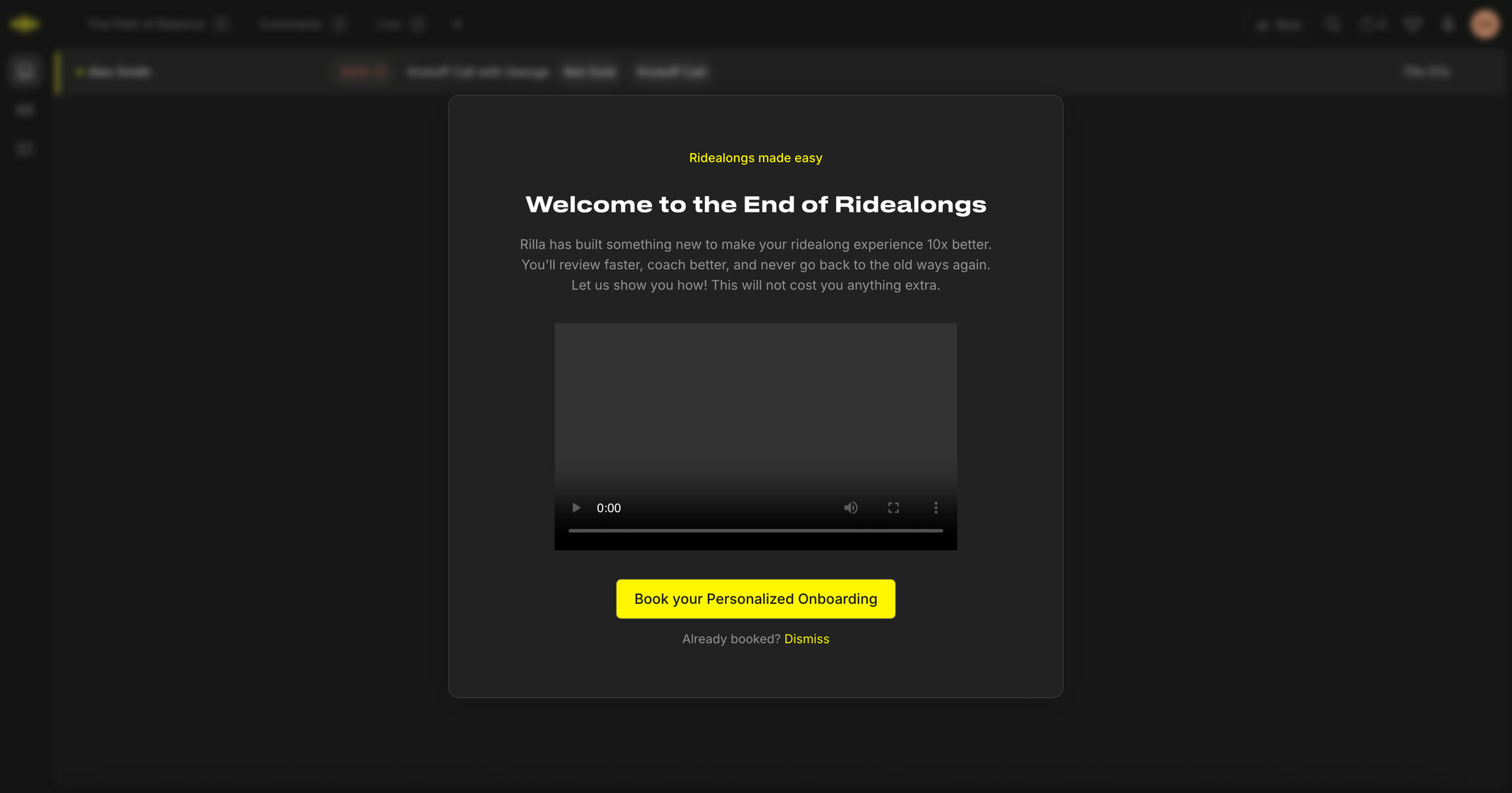
Our goal was simple: teach managers to coach without needing a CSM.
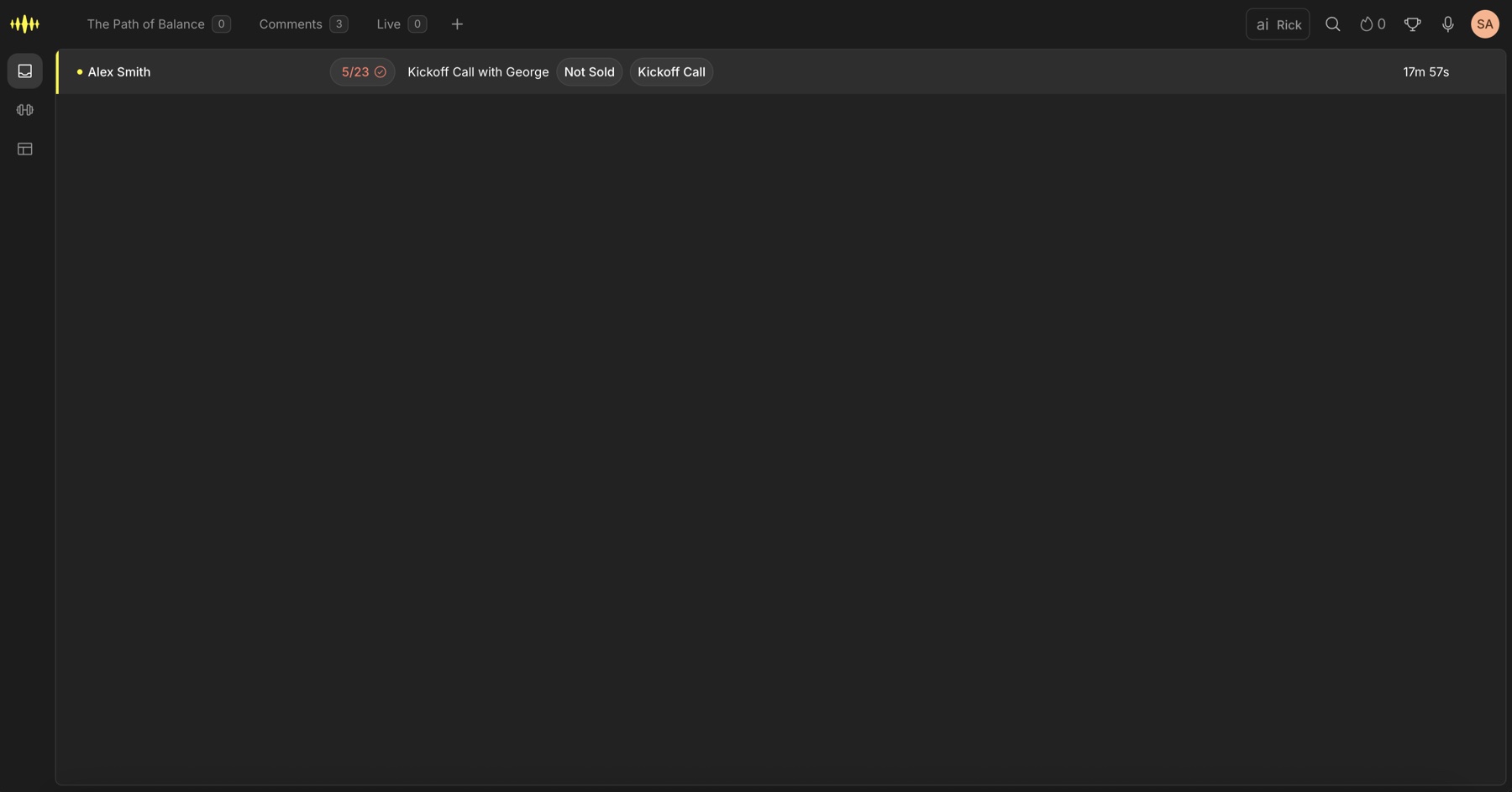
We’ll be teaching you how to use Rilla
and coach your team 10x faster.
Let’s jump into our practice ridealongs!




Dummy ridealongs start here.
We built onboarding one friction point at a time
Every day, I watched session replays of every manager who onboarded, paired them with Mixpanel and Grafana data, and shipped another iteration.
Watch every replay → isolate friction → ship → measure → repeat
Not one big redesign, but a series of small corrections backed by real behavior.
First, managers had to actually finish onboarding
Our first version asked managers to coach a real rep immediately. For someone still learning the product, the stakes were too high.
So I built dummy ride-alongs where managers could practice without sending feedback to a real rep.
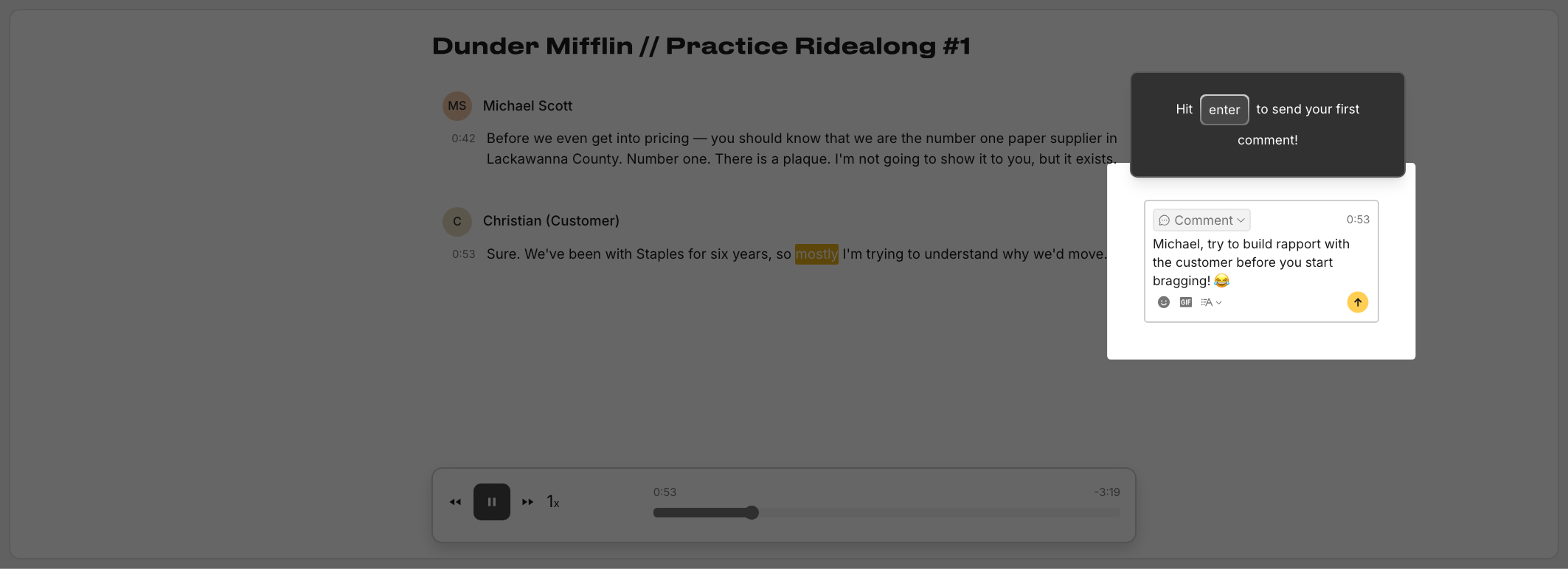
Teach one core loop
I stripped the experience down to three actions:
Find a moment → Leave a comment → End the ride-along
Rilla was keyboard-first, but many managers reached for the mouse. So each action got an obvious button with the shortcut built in, teaching the keyboard instead of assuming it.
One problem solved
Those iterations moved onboarding completion from 50% to ~100%.
But solving completion exposed the next problem.
Then we had to get them to come back
Nearly everyone could finish onboarding. But only 5% came back the next day to coach.
Watching their sessions revealed what happened: managers left the guided experience, returned to the full product’s wall of tools, and froze.
Finishing onboarding wasn’t enough. We had to make the transition into the real product work.
Unlock complexity as managers become ready for it
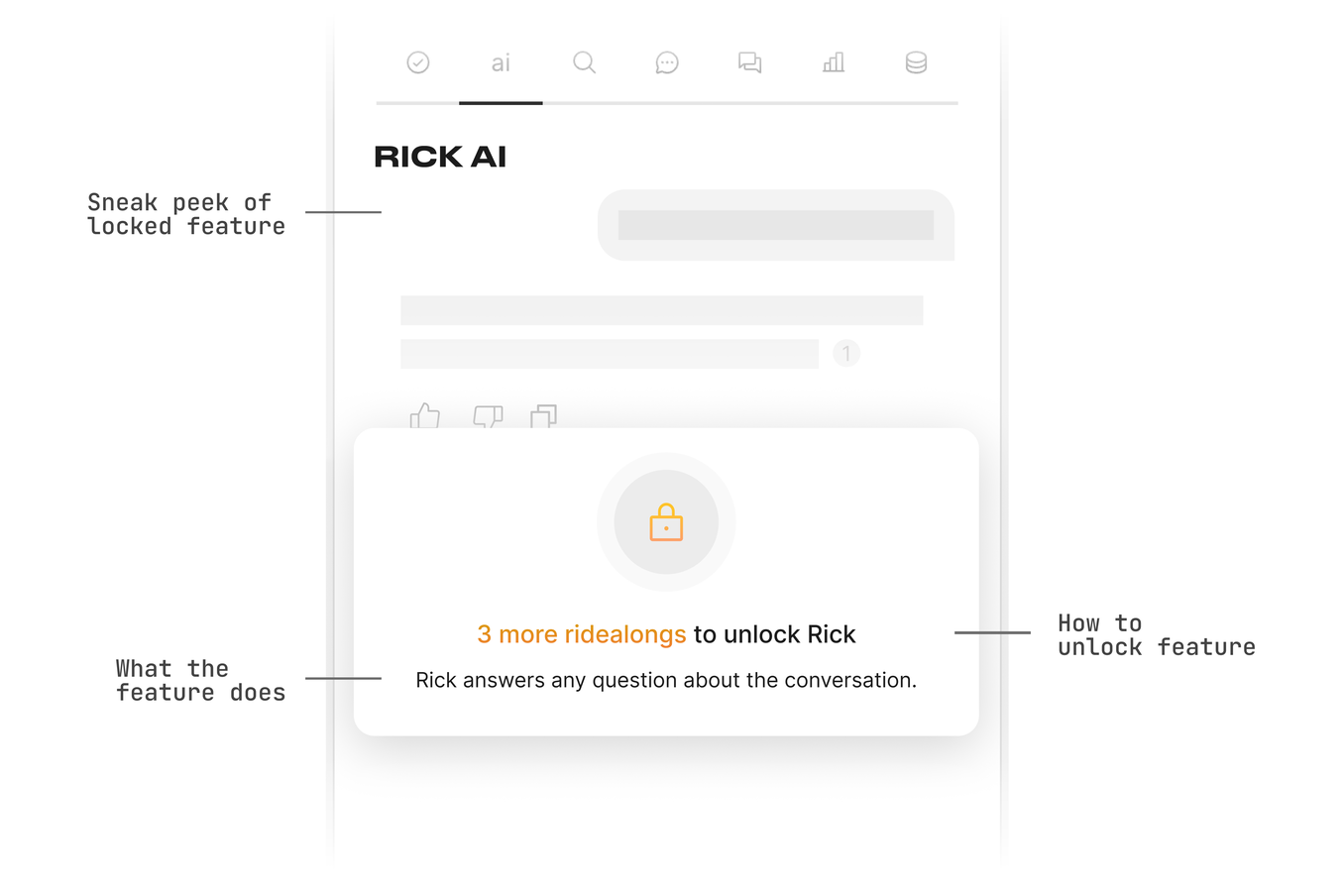
Borrowing from how games introduce mechanics gradually, I built an unlock system that introduces tools as managers complete real ride-alongs.
Core coaching → Rick AI after 3 → Script trackers after 6 → more over time
Managers keep practicing the core coaching loop while learning one new capability at a time.
Locked, but never hidden
Future tools stay visible even before managers can use them.
That preserves the shape of the product while giving managers something to work toward. Coaching their reps is the only thing standing between them and the next tool.
Make learning feel like a reward
Unlocking a new tool shouldn’t feel like being handed more software to learn. So I used animation and sound to make each unlock feel earned.